A-Ware
Capstone project using computer vision on Raspberry Pi hardware.
Overview
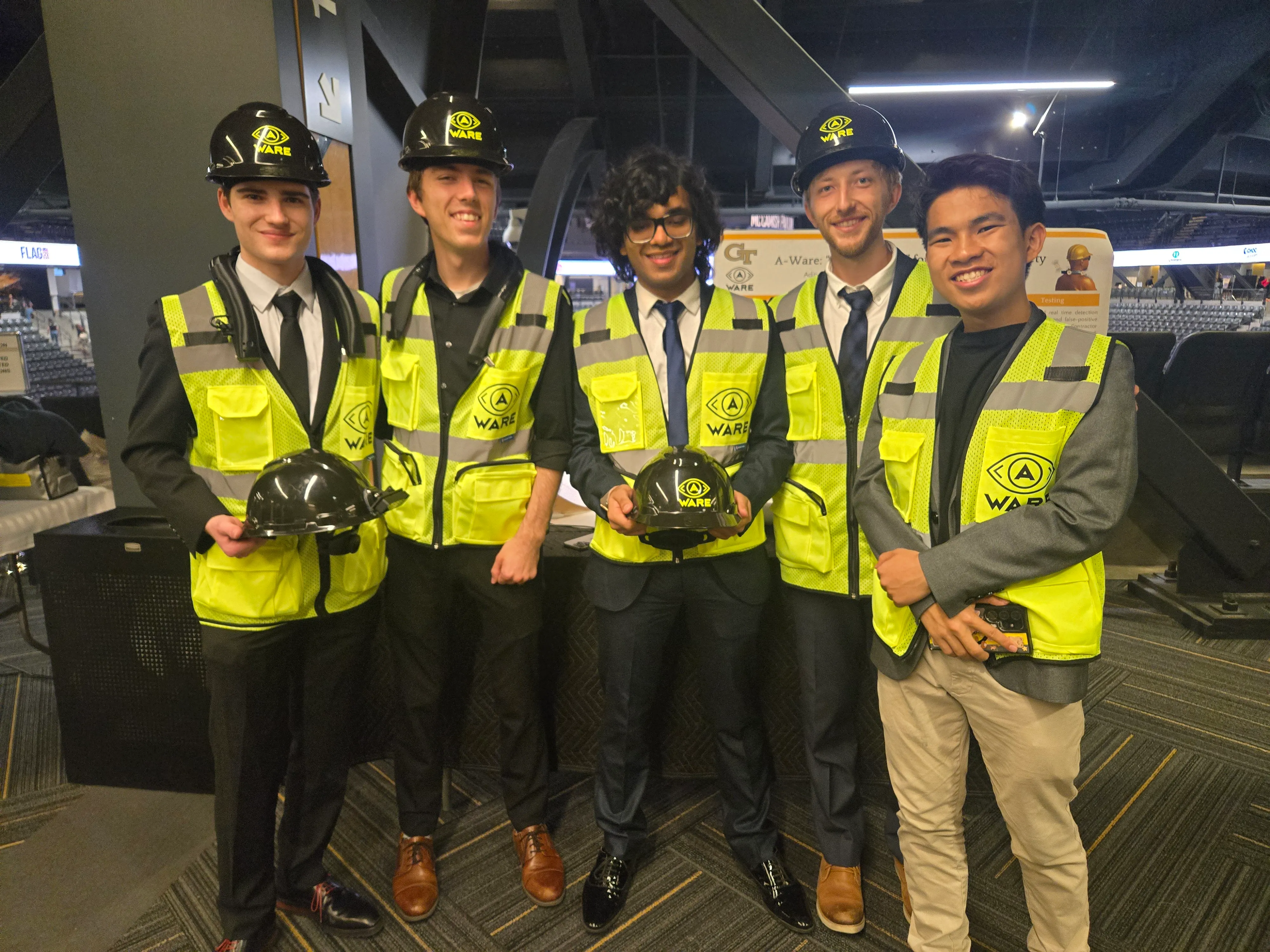
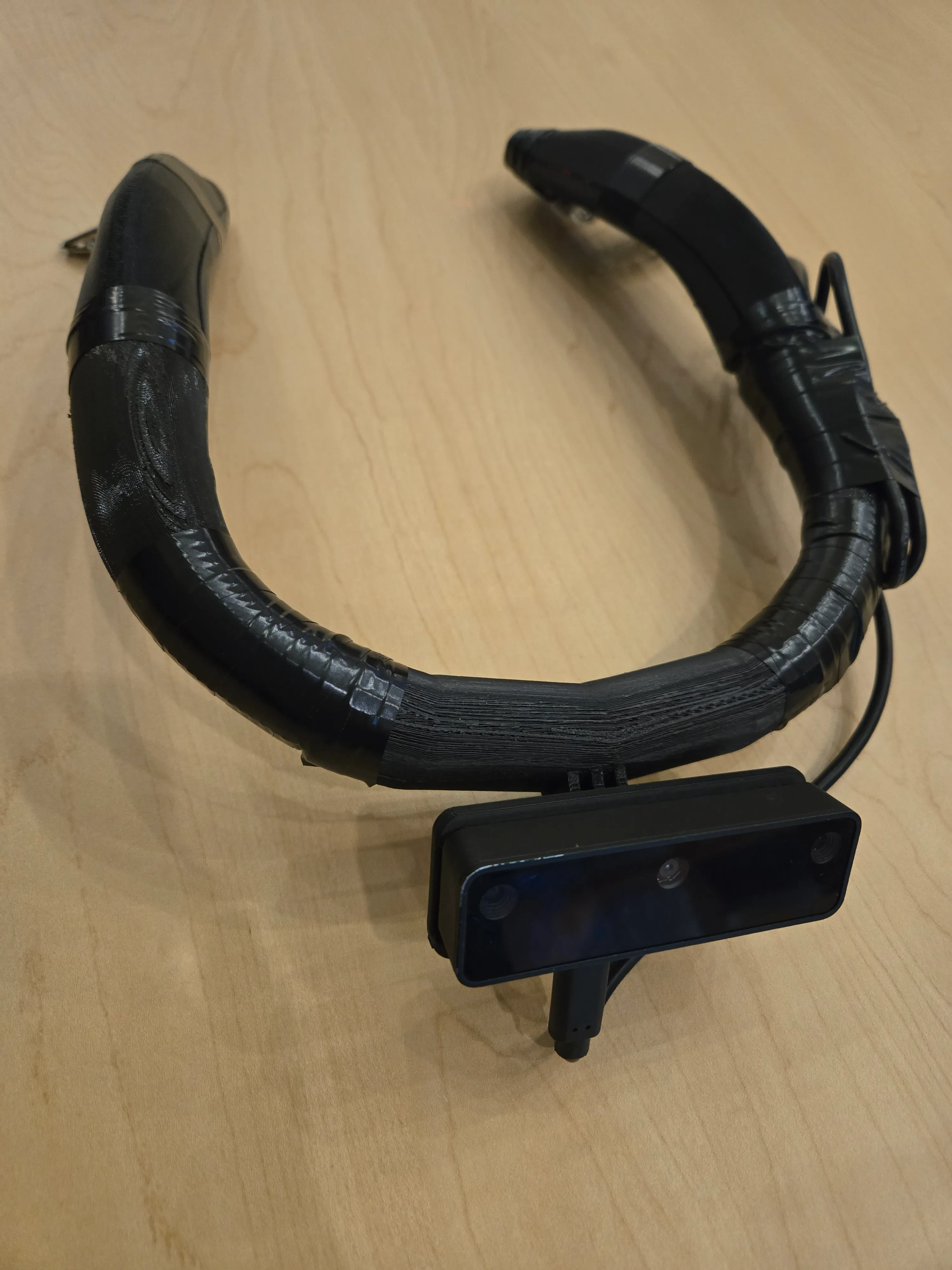
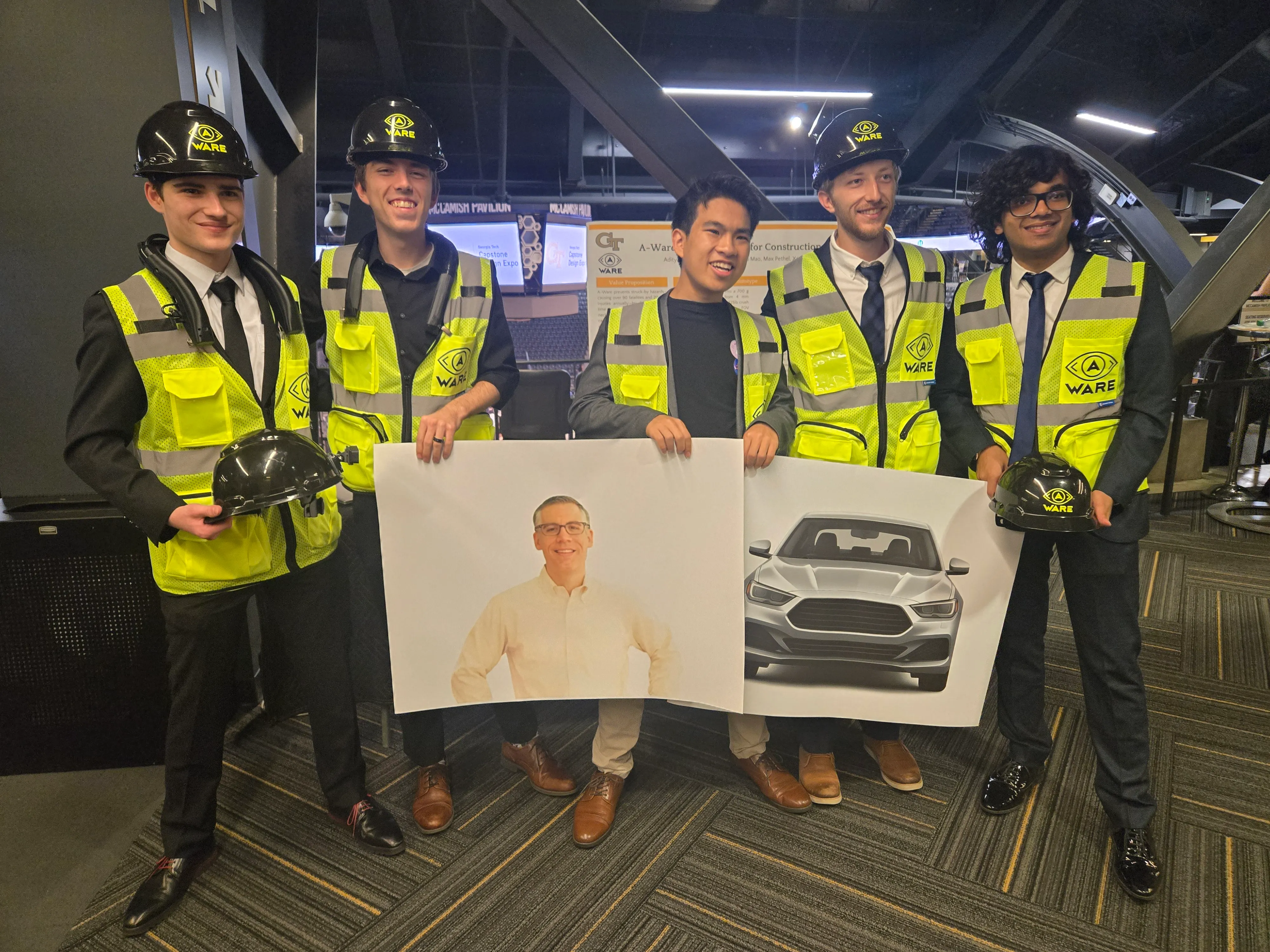
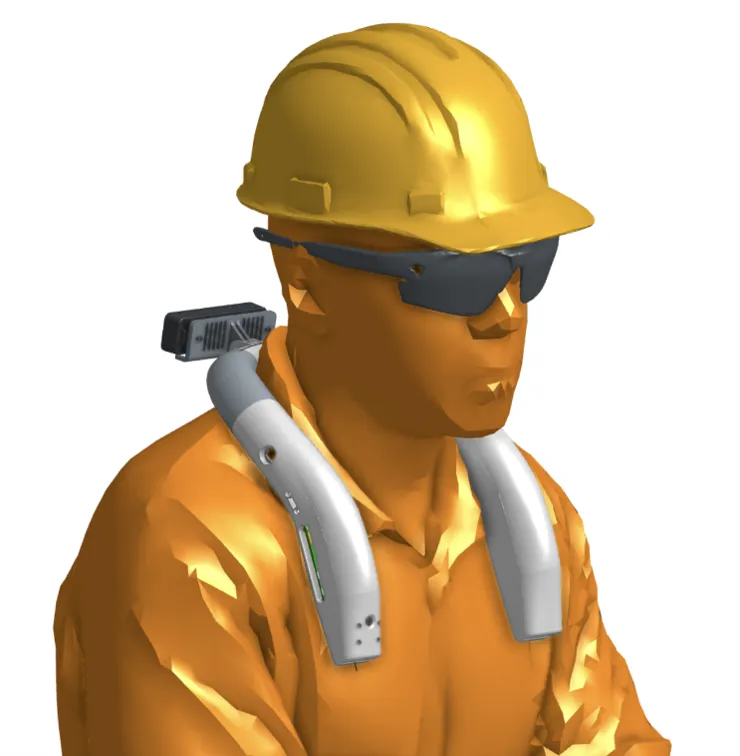
A-Ware is a wearable device I built with a team of five for Georgia Tech’s interdispinary Create-X capstone course, designed to give construction workers situational awareness for the blind spot behind them. It’s a shoulder-worn haptic rig paired with a rear-facing stereoscopic camera that watches for approaching hazards, like reversing trucks or swinging loads, and alerts the wearer with directional vibration before impact. The business idea behind it was to slot into construction site safety budgets as a supplement to existing PPE. I worked on the software side of the team, building the computer vision and hazard-detection pipeline that decides what’s dangerous and how to alert the wearer.
Technical Overview
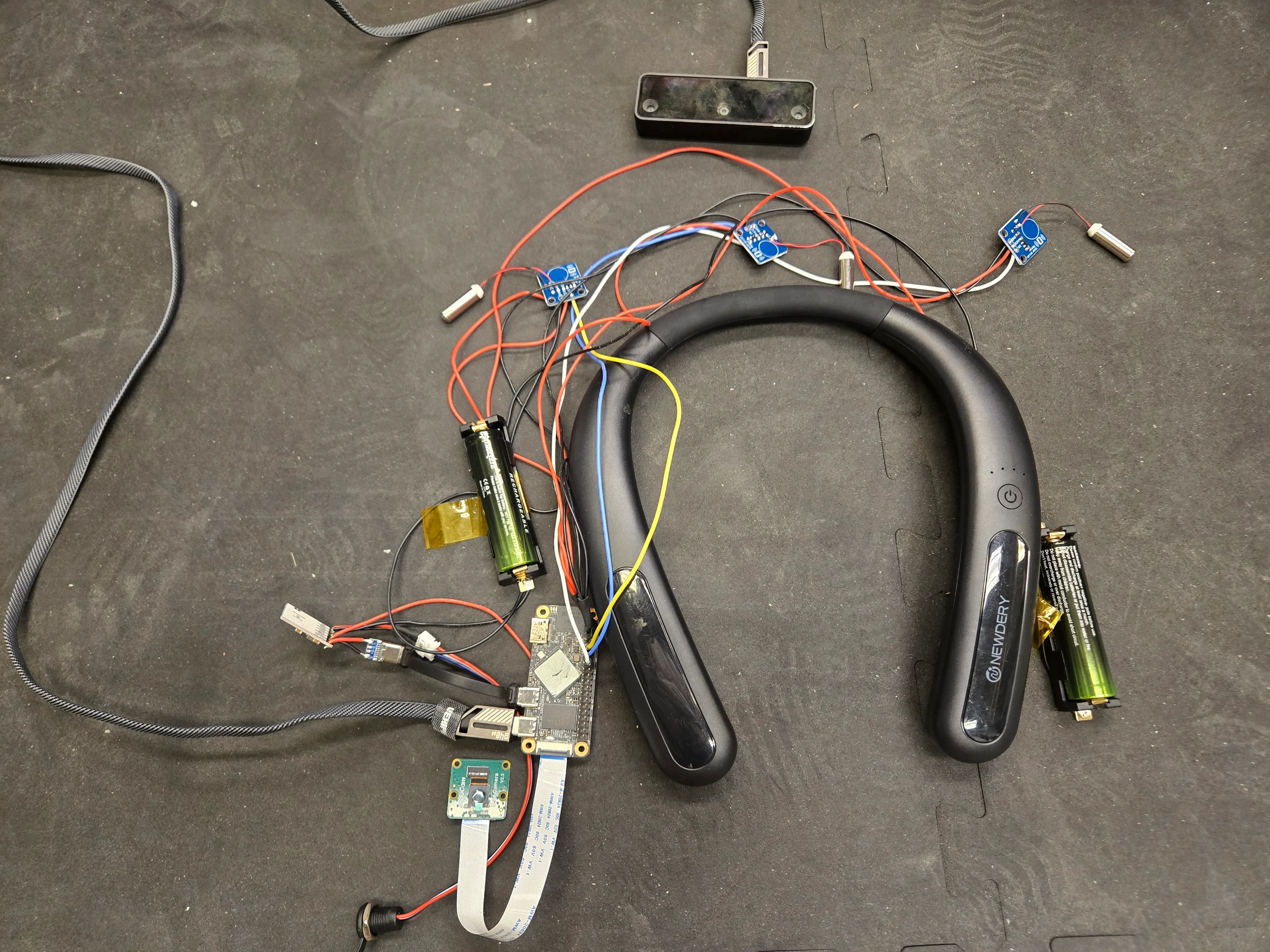
The device runs on a Luxonis OAK-D stereoscopic camera doing on-board object detection, feeding a Raspberry Pi Zero 2W that I programmed in Python against the camera’s DepthAI SDK. For the demo, I used a pretrained vehicle-detection model with a 90% confidence filter to cut down false positives, then used the camera’s depth output alongside each detection’s bounding-box position to estimate the object’s real-world position. Comparing that position across frames gives a velocity vector, so the Pi can tell whether something is actually closing in on the wearer rather than just present in frame. When a detected vehicle is approaching at more than 10 mph, the Pi drives the haptic motors, using RPi.GPIO, in the direction of the threat so the wearer feels which way to move without needing to turn around and look. Outside of the CV pipeline, I also designed and fabricated the electronics for the device, wiring the vibration motor driver boards, battery management system, and camera module into the 3D-printed frame the team built. Code for A-Ware is on GitHub.